Humberstone Lock Services
Issue 2 of 3LocksmithPort Colborne, Ontario
Lost Keys — Same-Visit Rekey: how the work is done
How much a lost key matters depends on what was lost with it.
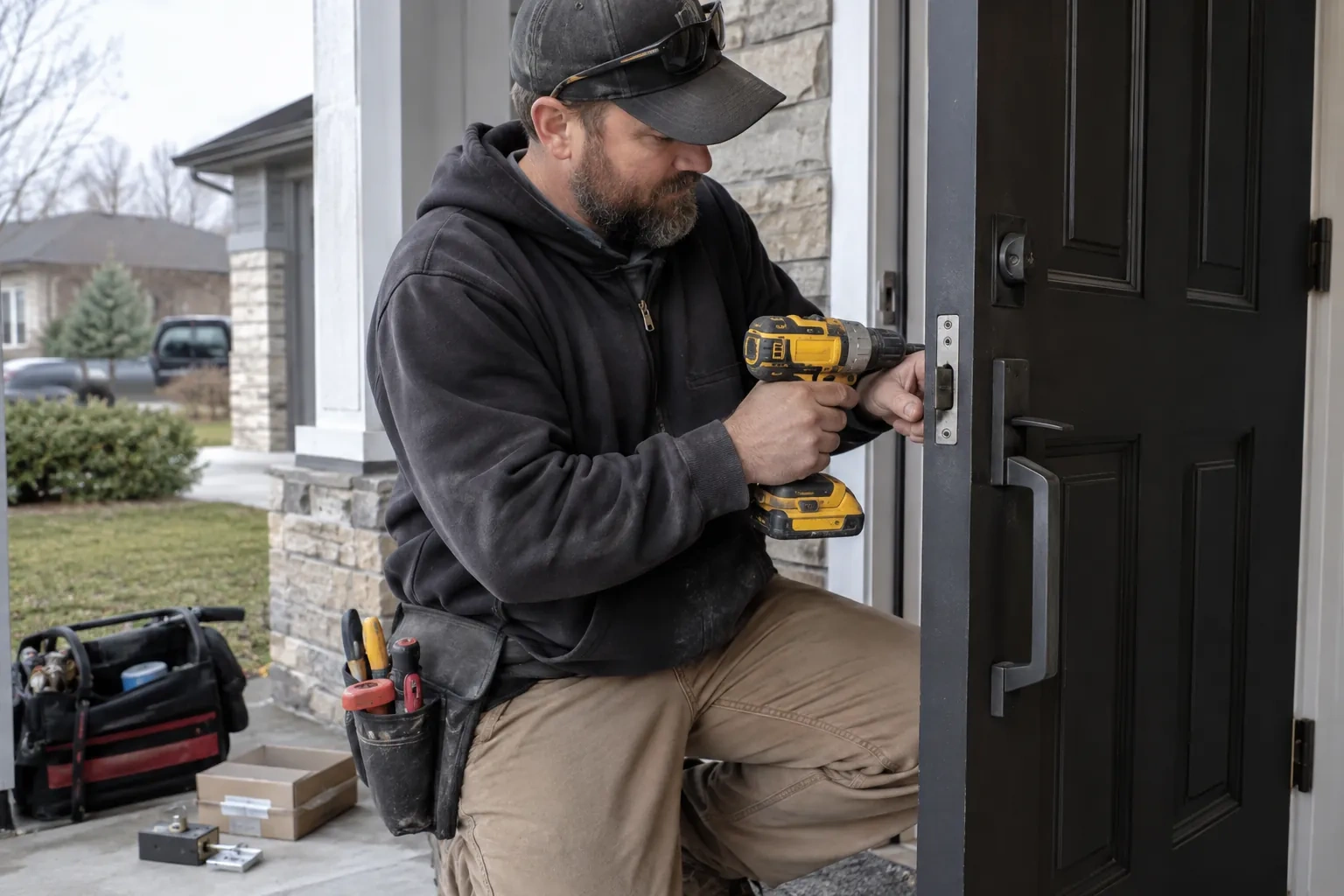
How much a lost key matters depends on what was lost with it. A ring that dropped into a lake on a canoe trip tells nobody where it fits, so the rekey is a tidy precaution. A ring taken with a wallet or bag that carried your address is a different story: someone now holds both the key and the door it opens, and the rekey comes first. The locksmith asks about this on the phone, says plainly which situation you are in, and schedules the visit accordingly. The work is the same either way, and so is the outcome: a key nobody else has.
Which cylinders the key actually opened
The locksmith walks the property with you and tries to think like the key. Front door deadbolt and handle, the back door, a side door, the door between the garage and the house, the shed, a gate padlock, a basement walkout, the door to a storage room or workshop. Each cylinder the missing key fitted goes on a list. Anything it fitted that is not yours to change goes on a second list: a shared lobby door, a parking gate, a community mailbox compartment, a workplace. The first list becomes the scope of the visit; the second becomes a set of calls you can make with the locksmith's help while the work goes on.
Bringing every door onto one key
When the household wants a single key, the locksmith pins each compatible cylinder to the same combination in turn, using the same cut key as the reference so nothing drifts between doors. A cylinder from a different keyway family is exchanged for one that matches, or the household keeps a second key for that door if they prefer. Where a home has a keyed garage entry, a shed and a gate on the same list, they follow the same process. The finished set is tried door by door with a single key, and the spare cylinders and old keys are gathered up so nothing that fits the old combination stays in circulation.
The code written down for next time
The new combination is recorded as a short code, either on a card the locksmith gives you or on the key tag, and a copy stays in the locksmith's job notes if you wish. That code is what makes future copies accurate: a key cut to code has fresh, original depths, while a copy of a worn key inherits every rounded edge. It also means a lost key years from now is met with a different code, never a repeat. Keep the card with the house papers, and when a new key is needed, ask for it to be cut from the code rather than traced from a tired one.