Commercial · Port Colborne
Commercial-Grade Lock Replacement
A new tenant moved into the unit next door, and the property manager just found three different cylinders on three doors, none of them cut to the same key.
Commercial-Grade Lock Replacement
In plain words
For a business running several locations, this service is often less about one broken lock and more about bringing every door onto a single, manageable key or interchangeable-core system. The locksmith surveys what is currently on each door, works out a keying structure the business can actually administer, from a single master down to individual change keys, and replaces mismatched hardware with cylinders built to accept that structure. Keys are cut and logged against the new system, and any hardware still under a fire or egress rule is checked and matched to that rule at the same time.
How the visit goesThe kitchen delivery door gets shouldered open more than a hundred times a shift, and lately the latch slips past the strike plate instead of catching it on the first push.
Port Colborne
How the visit goes
Looking at how the opening is actually used
A door's traffic shapes which hardware belongs on it. A staff entrance opened a handful of times a day tolerates lighter-duty hardware than a delivery door shouldered open on every shift, and a customer-facing storefront door needs a finish and function that hold up under public use. The locksmith asks how often the door opens, who uses it, and whether it is propped, wedged or held open in daily practice, since a door habitually held open needs hardware and a closer arrangement that account for that use rather than fighting it.
Selecting hardware built for this opening
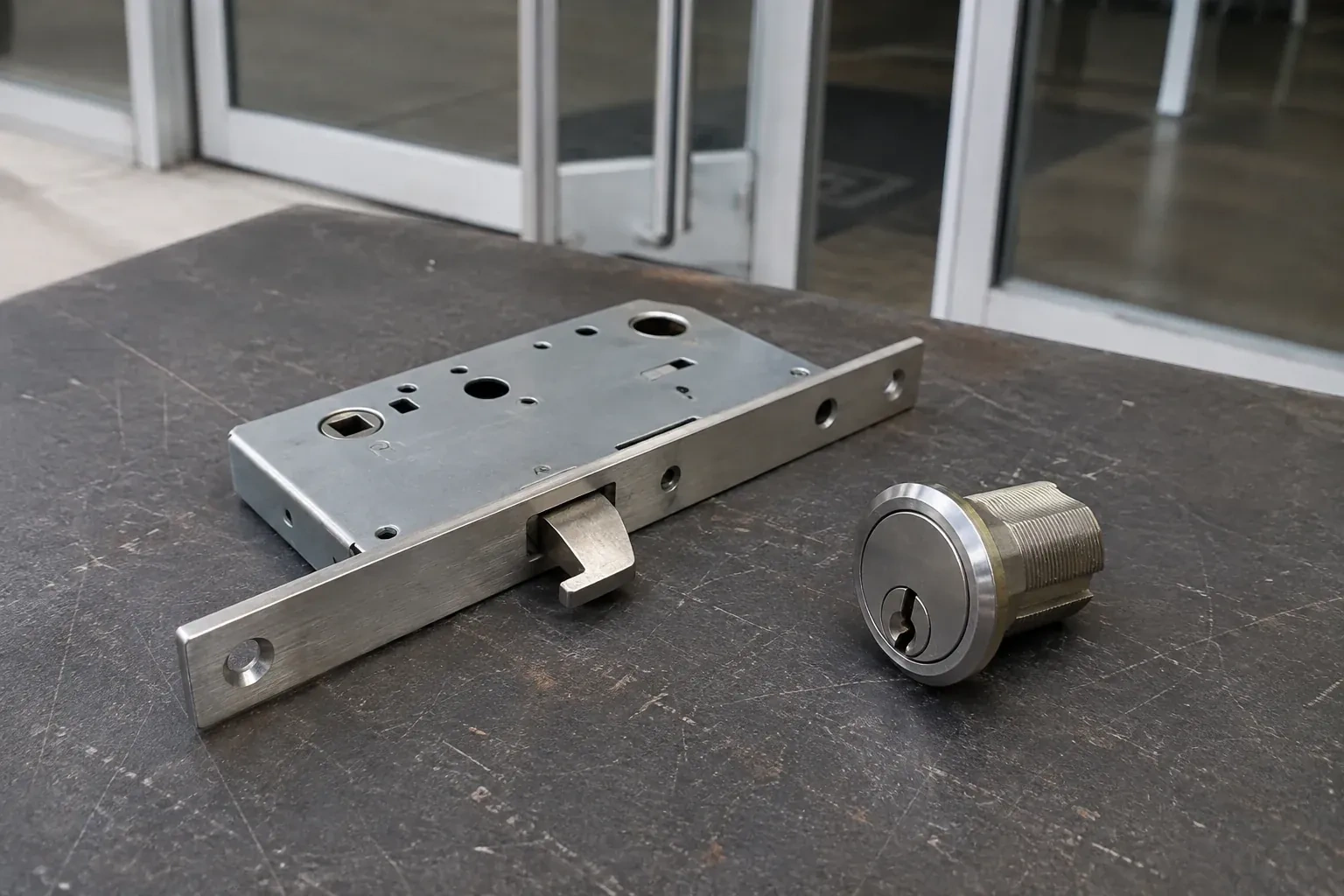
With the assessment complete, the locksmith orders hardware to match: a mortise lock body for a mortise-prepped door, a heavy cylindrical lockset for a standard bored door, or a narrow-stile lock or hookbolt for an aluminum storefront. Where the door is part of a fire separation or a required exit, the hardware chosen is listed for that rating and function rather than a general-purpose substitute. Grade and finish are matched to the traffic the door takes, so a heavily used delivery door gets hardware built for that duty rather than the lightest option available.
A record the next contractor can use
The business keeps a plain account of what was fitted: the hardware model and function, the keying it was cut to, how many keys were issued and to whom, and any fire or exit rating the door carries. For a property manager or facilities team, this record answers the next question about that door without another site visit, and for a business with several locations it becomes a reference for bringing other branches onto the same standard over time.
Commercial-Grade Lock Replacement
In the van
- Listed panic or exit hardware
- Hookbolt and deadlatch hardware
- Electric strike
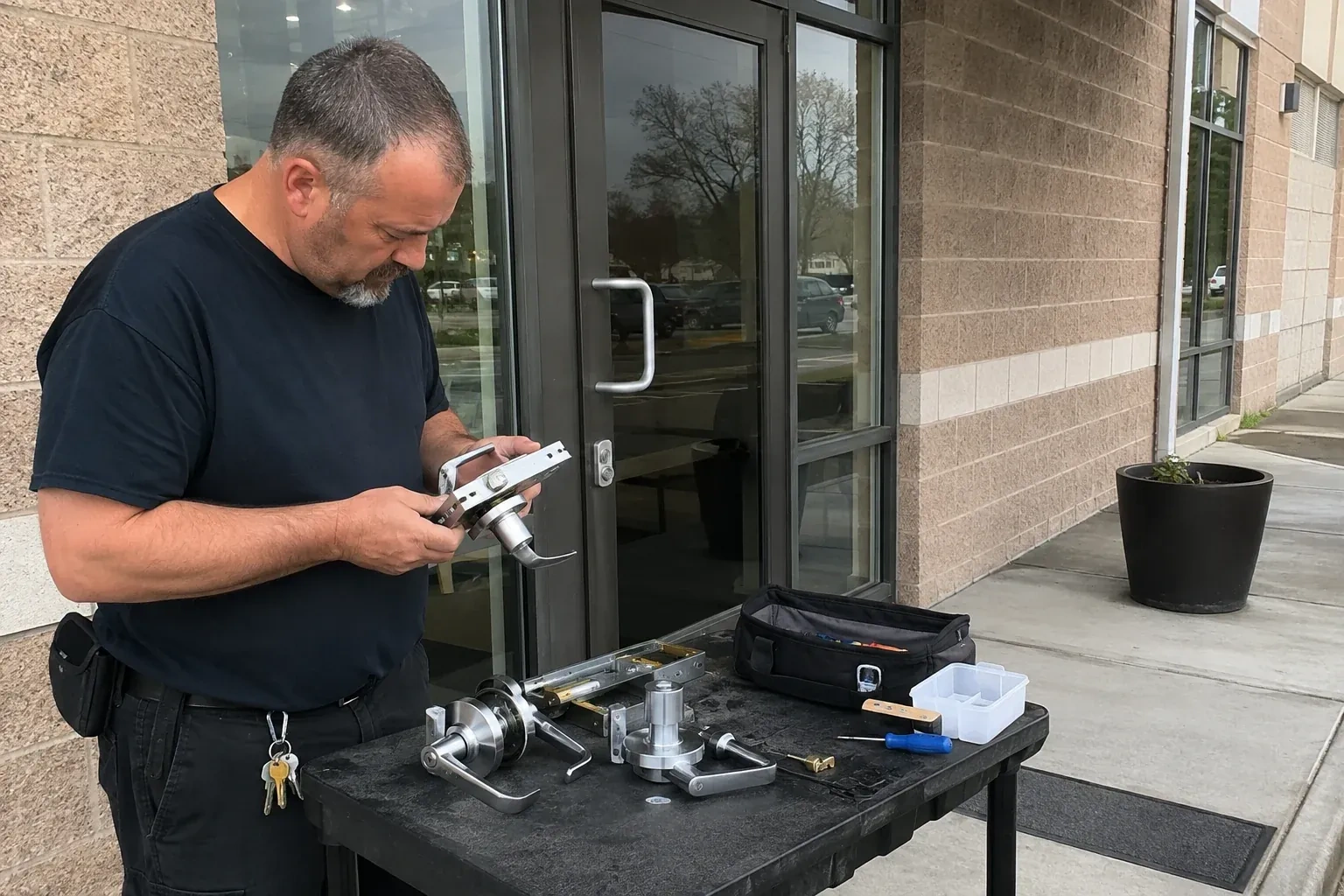
- Mortise prep and installation tools
- Interchangeable-core cylinder
What affects the quote
Same fees day, night or weekend
1Number of keys cut and issued
Keys are counted individually into the quote. A small office needing a handful of keys is a smaller line item than a multi-shift operation issuing keys to a large staff roster.
2Type of hardware the door takes
A mortise lock body, a heavy cylindrical lockset and a narrow-stile lock or hookbolt are priced differently as hardware and take different amounts of labour to fit, so the quote follows what the door's own construction requires.
3Fire-rated or listed hardware requirements
A door that is part of a fire separation needs hardware listed for that specific rating, which is a narrower and typically costlier category than general-purpose commercial hardware, and the quote reflects that requirement rather than a standard substitute.
Commercial-Grade Lock Replacement: questions
Is panic hardware the same as fire exit hardware?
Related but not identical. Panic hardware allows single-motion release without a key on any qualifying exit door. Fire exit hardware does the same job on a door that is also part of a fire separation, and it is listed for that combined use with no mechanical hold-open feature, since a fire door has to be able to close and latch on its own at all times.
Who should hold the master key once the system is set up?
That is a decision for the business, not the locksmith, but the general practice is to limit master keys to the smallest number of people who genuinely need building-wide access, and to log who holds each one. Sub-master and change keys can then cover departments, shifts or single doors without every key holder carrying access to everything.
What is the difference between a mortise lock and a cylindrical lockset?
A mortise lock has its whole mechanism, latch, deadbolt and sometimes a separate handle function, built into one case that sits inside a pocket cut into the door's edge. A cylindrical lockset is a bored-in unit, simpler to service, common on standard commercial and residential doors alike. Which one your door takes depends on how it was originally prepped, not on preference alone.
Commercial Locks
- Master Key System DesignA dental office wants the front desk to lock up at night without ever holding a key to the room…
- Access Control InstallationThe keypad on the side door has started sticking on cold mornings, codes get shared instead of…
- Panic & Exit HardwareThe daycare wants the yard gate and the classroom door alarmed so a staff member hears the moment…
Commercial-Grade Lock Replacement near you
The pages that follow describe the lock services offered in Port Colborne one by one, without sales talk. Where a service has a simpler or less involved cousin, the page says so. Where a repair will do instead of a replacement, the page says that too. The aim is for you to choose well, not to choose more.